
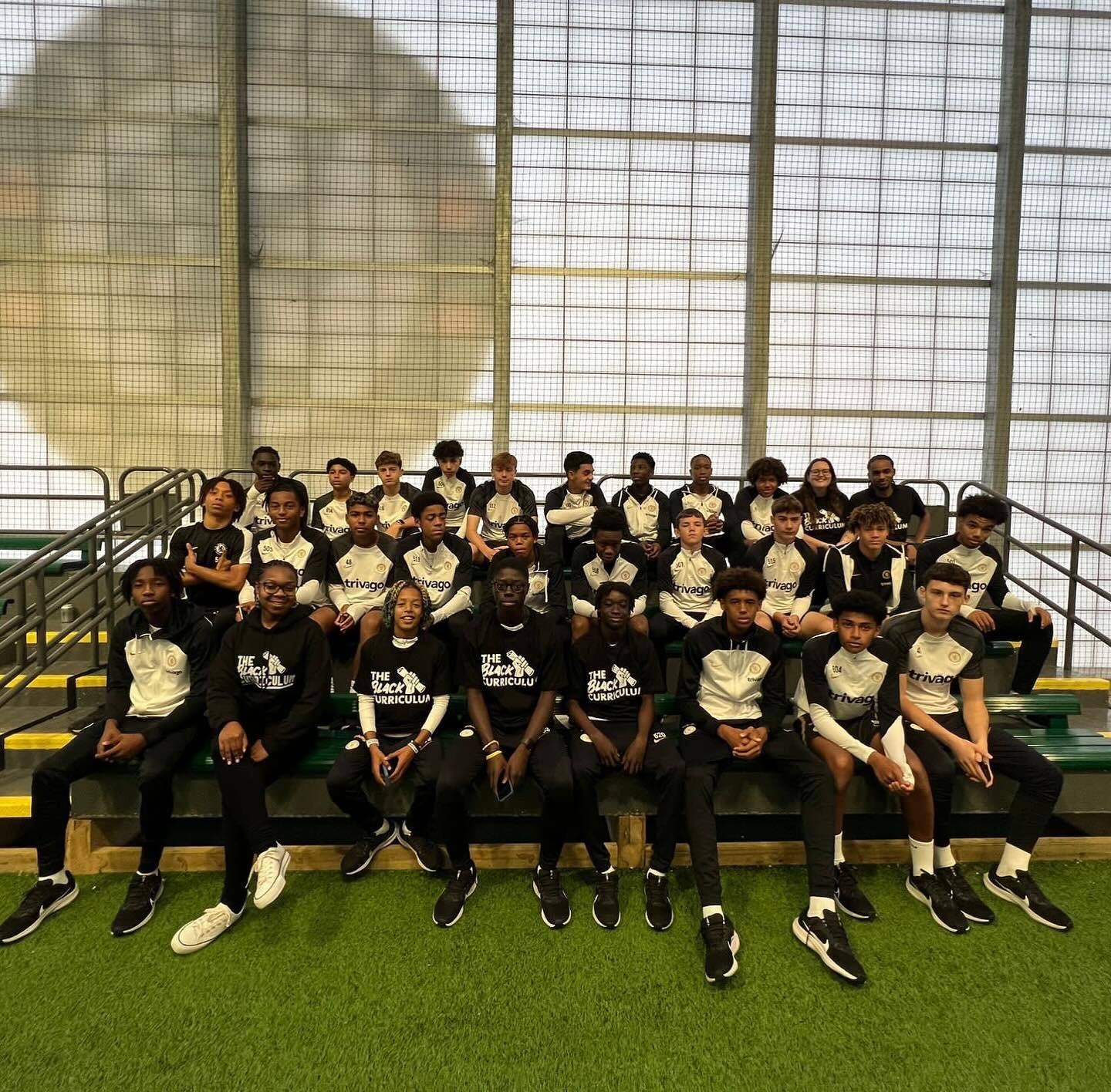
Chelsea Academy Workshop
Exploring Black British history, music and cultural identity through education and creativity.
At The Black Curriculum, we believe that education should extend beyond the classroom, creating opportunities for young people to engage with history in ways that are relevant, meaningful and connected to their everyday experiences.
Our work with Chelsea Football Club's Academy reflects this commitment. Through a series of educational workshops, we introduced young academy players to the history and influence of sound system culture, exploring its contribution to British music, technology, identity and belonging.
The sessions brought together history, cultural education and creative expression, demonstrating how Black British history can be explored through subjects and experiences that resonate with young people.
Exploring the Roots of British Music at Chelsea FC Academy
As part of our work with Chelsea FC Academy, The Black Curriculum delivered an educational workshop for young people aged 13–16, focusing on the impact of sound system culture on the evolution of British music.
Sound system culture has played a significant role in shaping Britain's musical and cultural landscape. Rooted in Jamaican traditions and developed within Caribbean communities, sound systems became important spaces for musical innovation, cultural expression and community connection.
In Britain, these traditions helped influence the development of genres including reggae, jungle, drum and bass, garage and grime, leaving a lasting mark on the country's musical identity.
For the young people at Chelsea FC Academy, the workshop provided an opportunity to explore these connections and develop a deeper understanding of the Black communities, histories and cultural movements that have helped shape the music they encounter today.
By examining sound system culture through the themes of technology, identity and belonging, we encouraged participants to look beyond music as entertainment and consider its wider historical and social significance.
Connecting History with Identity and Belonging
A central part of The Black Curriculum's approach is helping young people understand that Black British history is an integral part of Britain's wider story.
Music provides a particularly powerful way to explore this.
From the development of new musical styles to the creation of community spaces, sound system culture offers an important perspective on the experiences, creativity and contributions of Black communities in Britain.
During the workshop, participants were encouraged to reflect on the music they listen to and consider the cultural influences behind it.
Through interactive discussions and activities, the sessions created opportunities for students to connect historical knowledge with their own interests and experiences.
This approach is particularly valuable when working with young people from different backgrounds, as it encourages curiosity, cultural awareness and a greater appreciation of the diverse influences that shape contemporary British society.
At The Black Curriculum, our aim is not simply to introduce historical information, but to make that knowledge accessible, engaging and relevant to the next generation.
From Learning to Creating: Putting Knowledge into Practice
Building on the first workshop, we returned to Chelsea FC Academy for a second session that placed creativity at the centre of the learning experience.
Having explored the history and cultural significance of sound systems, students were given the opportunity to create their own content inspired by what they had learnt.
This practical element allowed participants to move beyond listening and discussion, using their new knowledge as the foundation for creative expression.
The activity reflected an important principle of our educational approach: young people should have opportunities not only to learn about history, but also to interpret, question and engage with it in ways that are meaningful to them.
By incorporating content creation into the sessions, we provided an opportunity for students to demonstrate their understanding while developing their own responses to the themes explored.
The resulting work offered a creative reflection of the learning experience and highlighted how historical education can inspire participation, imagination and new perspectives.
Bringing Black British History into New Spaces
Our work with Chelsea FC Academy demonstrates the opportunities that emerge when cultural education is introduced into environments beyond the traditional classroom.
Football academies play an important role in the development of young people, providing opportunities for personal growth alongside sporting development.
Introducing educational experiences that explore history, culture and identity can complement this development, encouraging young people to engage with perspectives and subjects beyond their immediate sporting environment.
Through our workshops, we aim to make Black British history accessible to a wider range of audiences, recognising that meaningful learning can take place in schools, community spaces, workplaces, sporting institutions and beyond.
The Chelsea FC Academy sessions are an example of how this approach can be adapted to different settings while remaining grounded in our wider mission: to ensure that Black British history is taught, recognised and valued.
Building Partnerships That Support Meaningful Education
At The Black Curriculum, we recognise the important role that organisations and institutions can play in widening access to inclusive historical education.
Working with organisations such as Chelsea FC Academy creates opportunities to introduce young people to histories and perspectives that deserve greater recognition.
Our approach combines historical knowledge with engaging, age-appropriate educational experiences, designed to encourage discussion, reflection and participation.
Whether through workshops, assemblies, educational resources or tailored learning experiences, we work to ensure that Black British history is presented as an essential part of understanding Britain today.
The work delivered at Chelsea FC Academy reflects the possibilities of collaboration between education and sport, demonstrating how organisations can create space for conversations about culture, identity and the contributions of Black communities.
Continuing the Conversation Beyond the Classroom
Our sessions at Chelsea FC Academy were an opportunity to explore the influence of Black British culture through a subject that continues to shape the lives of young people: music.
From learning about the origins and development of sound system culture to creating content inspired by their discoveries, participants were able to engage with history through both discussion and practical activity.
For The Black Curriculum, this work represents the importance of making historical education relevant, inclusive and accessible across different environments.
As we continue working with schools, businesses, community organisations and institutions, our commitment remains the same: to ensure that Black British history is recognised as an essential part of British history and that more young people have opportunities to engage with it.
Interested in bringing The Black Curriculum to your organisation?
We work with schools, businesses and institutions to deliver engaging educational workshops, talks and learning experiences that explore Black British history, culture and identity.
Get in touch with The Black Curriculum to explore how we can work together to create meaningful learning opportunities for your community or organisation.